
Introduction
If you ship fragile, valuable, or precision-made products, choosing the right protective packaging can make a huge difference to the protection of your products and the satisfaction of your customers.
Suspension and retention packaging are two of the most effective protective packaging methods that are used across industries. While they might look like similar solutions at first glance, they actually work in different ways and are suited to different applications.
In this guide, we’ll help you understand the difference between retention and suspension packaging and help you choose the most effective solutions for your products, whether you’re shipping electronics, specialist components, medical devices, automotive parts, or even delicate retail items.
Contents
What is retention packaging?
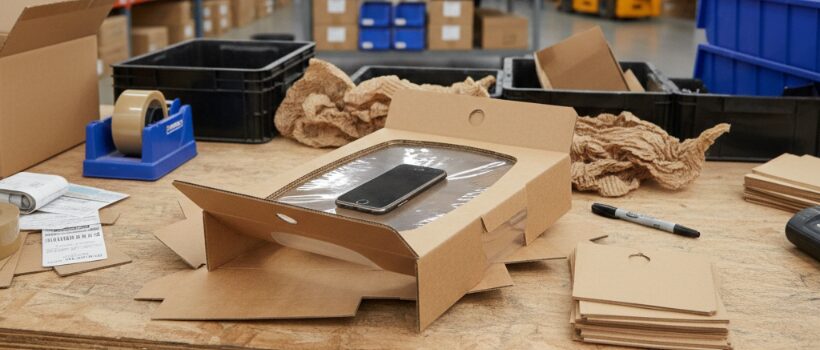
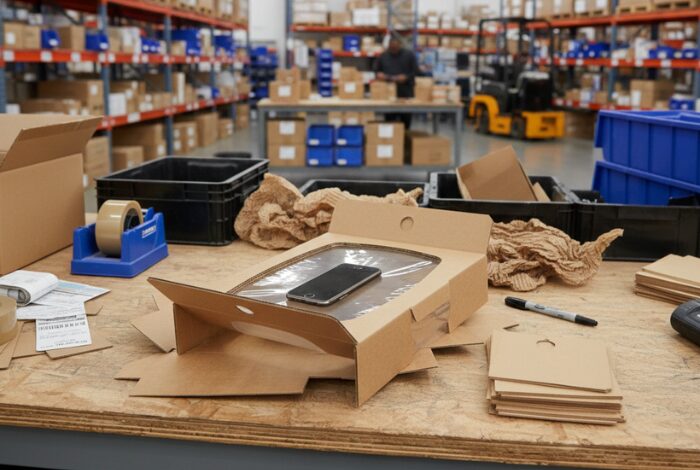
Retention packaging is designed to hold a product securely in place during transit using a highly resilient film attached to a corrugated cardboard frame. The film then stretches around the item, preventing any movement inside the box.
The film from the packaging is tightened around the product, and the insert is folded and placed into the outer box once it’s assembled. This setup prevents any movement, and the packaging protects the contents from impacts and mishandling during transport.
This type of packaging is particularly useful for products that are unusually shaped because the film conforms easily to the product and can easily accommodate multiple variations of a product without needing different inserts every time.
How does retention packaging work?
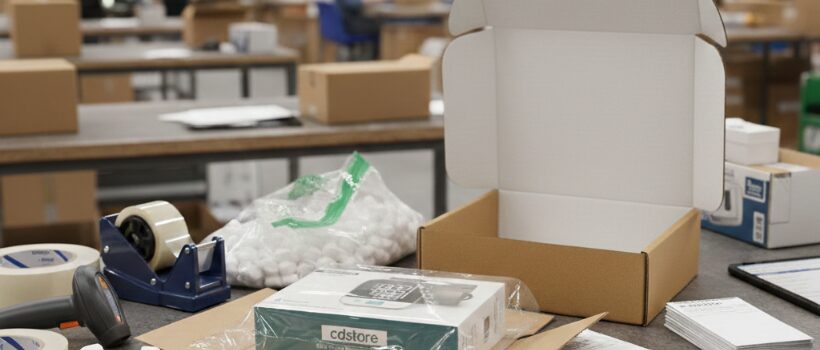
Firstly, the retention insert is first laid flat on a packing bench or workstation and the transparent film is then lifted so the product can be placed beneath it. Once the product is in the right position, the cardboard flaps are folded down, tightening the film securely around the item.
The completed insert is then placed into an outer corrugated box before sealing and shipping.
The tension in the film prevents movement throughout its shipping cycle, helping to reduce the risk of any damage.
What are the advantages of retention packaging?
Retention packaging offers several advantages for businesses that ship fragile or valuable products:
- Flexibility: The film adapts to different shapes and sizes and can support a wide range of products using the same format.
- Space-efficient: Retention packaging can be stored flat when they are not in use, reducing warehouse storage requirements.
- Fast assembly: Packing is quick and straightforward, improving productivity and reducing labour costs.
- Cost-effective: Retention packaging provides better protection for your products, meaning you will see fewer damages, complaints, and returns.
- Sustainable: Retention packaging is typically recyclable through standard kerbside recycling streams, helping to reduce packaging waste.
What is suspension packaging?
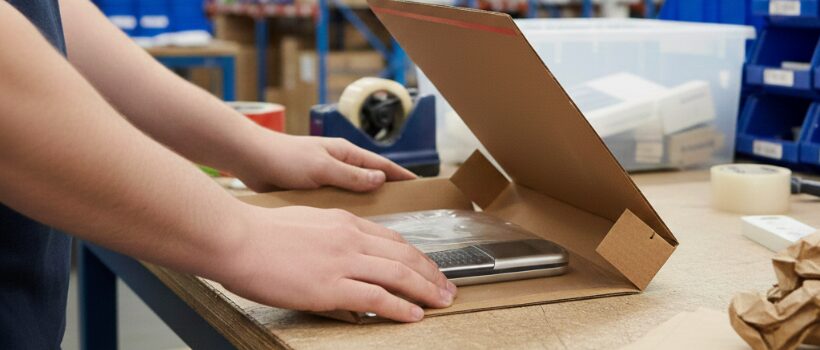
Suspension packaging works slightly differently. Instead of securing the product against a single layer of film, suspension packaging suspends the item between two layers of highly resilient film within the outer box. This creates an air gap around the product, allowing it to “float” inside the packaging.
The suspended design helps to absorb any shocks or impacts during transit by preventing the product from coming into direct contact with the outer box walls.
Essentially, suspension packaging protects your products by isolating them within the centre of the pack, making it particularly effective for highly fragile and delicate items that require additional impact protection.
How does suspension packaging work?
Suspension packaging offers several advantages for businesses that ship fragile or valuable products:
- Excellent protection: Retention packaging completely absorbs any impacts by suspending your products within an air gap between two single layers of film.
- Highly versatile: The film is incredibly resilient and can accommodate products with different shapes while still providing a secure fit.
- Premium presentation: The suspended appearance gives the product a clean and high-quality look that will reflect positively on your brand.
- Efficient: Suspension packaging inserts are lightweight and can be stored flat when they’re not being used.
- Sustainable: Suspension packaging is recyclable and suitable for reuse.
What's the main difference?
Although both suspension and retention packaging use tensioned film and a corrugated outer pack, the key difference lies in how the product is protected.
Retention packaging secures the product tightly against a single layer of film to prevent any movement, focusing primarily on immobilising the product.
Whereas suspension packaging suspends the product between two film layers, creating a protective air gap around it, primarily adding extra cushioning surrounding the product.
So, in conclusion, retention packaging is ideal for products that need to stay firmly fixed in position, and are particularly suited to irregularly shaped items or lower-volume shipments.
Suspension packaging is better suited to highly fragile or impact-sensitive products where additional shock absorption is needed.
Summary
Both suspension packaging and retention packaging provide highly effective protective solutions for your fragile and valuable products.
While the two packaging solutions share their similarities, the level of cushioning and the way the product is supported are what really separate them.
Choosing the right option can help reduce transit damage, lower returns, improve operational efficiency, and deliver a better experience for your customers.
Get in touch with our team of specialists and find out how you can improve your packaging today.