

Introduction
When you source packaging solutions to protect your high-value products, equipment, sensitive electronics, or heavy machinery, safety is your top priority. You need heavy-duty protective packaging and inserts that can handle rough logistics networks.
If your business makes, packs, fills, or imports these packaging materials for use in the UK, you must also comply with strict environmental regulations. It is essential that you keep your supply chain moving by balancing performance with legal requirements.
The packaging essential requirements were originally based on a shared European goal to reduce environmental waste. They were first introduced into UK law to align with the wider EU Packaging and Packaging Waste Directive (94/862/EC).
The goal was to stop businesses from using overly large, wasteful boxes for tiny items and to force manufacturers to consider what happens to their materials at the end of their lifecycles.
Despite the UK leaving the EU, these rules have remained as a core part of British environmental law through the Packaging (Essential Requirements) Regulations. These regulations ensure that all packaging systems placed on the market are efficient, clean, and easy to recover.
Contents
What are the Packaging (Essential Requirements) Regulations?
The UK government tracks exactly how much packaging waste is generated and recycled each year through the Producer Responsibility Obligations (Packaging Waste) Regulations and the Extended Producer Responsibility (EPR) scheme.
According to official data from the Department for Environment, Food, and Rural Affairs (Defra), 75.2% of all UK packaging waste is recycled. If we look specifically at paper and cardboard, that number jumps to 86.4%.
However, even with these high recycling rates, the UK still produces millions of tonnes of waste each year. As a result, local Trading Standards officers actively check industrial and commercial packaging.

These regulations target the environmental impacts of packaging and packaging waste. They state that any business that makes or uses packaging must ensure that its design meets a set of baseline criteria before it can legally be sold or distributed.
The regulations apply to the “responsible person”. In simple terms, this means responsibility falls on:
- The business that first introduced packed or filled packaging to the market.
- Anyone who puts their name, trademark, or brand mark onto the package.
- The importer who brings packed goods into the UK from abroad.
The regulations cover all three tiers of packaging:
- Primary packaging: The direct packaging containing your product.
- Secondary packaging: Trays or boxes used to bundle products together.
- Tertiary packaging: Solutions such as wooden pallets, plastic shrink wrap, and custom foam shapes are used to prevent damage during transit.
What are the key requirements?
To ensure your packaging complies with the law, your design process must meet four main targets.
Minimise volume and weight
Your packaging must use the absolute minimum material necessary to keep your product safe, clean, and acceptable to the user. You are free to design high-performance containment systems, but they can’t be unnecessarily bulky.
- How to comply: Work with your packaging designer to match foam densities and box sizes to your product’s weight and fragility, rather than relying on oversized “one-size-fits-all” boxes.
Design for recycling, reuse, or recovery
Your transit packaging must be designed so that the material can be reused or recovered at the end of its life.
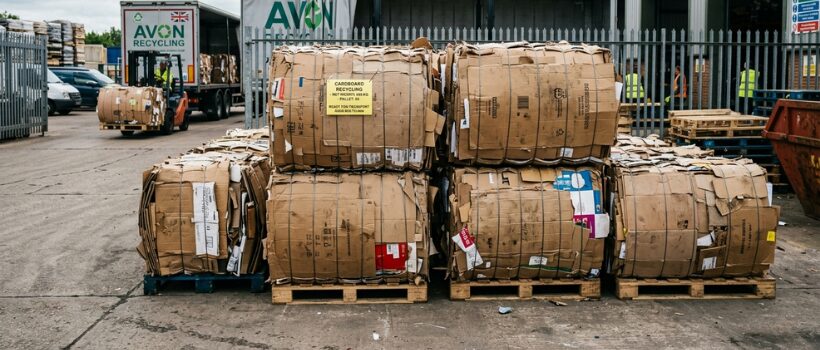
- How to comply: Select raw materials that fit easily into modern recycling streams. Using easily separated corrugated cardboard or widely recycled plastics makes compliance straightforward.
Reduce toxic end-of-life impacts
When your transport packaging reaches the end of its useful life and is discarded, incinerated, or sent to a landfill, it must emit as few toxic fumes, ash, or harmful liquids into the environment as possible.
- How to comply: Avoid complex, multi-layered composite materials that are glued together and can’t be separated, as these create highly toxic residues when burned.
Restrict heavy metals
The combined concentration levels of four specific heavy metals: lead, cadmium, mercury, and hexavalent chromium, can’t exceed 100 parts per million (ppm) by weight in any packaging component.
- How to comply: Always ask your raw material or foam suppliers for a declaration of compliance to prove no restricted heavy metals were added during manufacturing.
Risks and penalties
The regulations are actively monitored and enforced by Trading Standards officers. They have the legal right to audit your business and inspect your packaging systems.
By law, you must keep complete technical documentation for four years to prove that your packaging minimises waste and remains within heavy metal limits. If an officer requests this paperwork, you have 28 days to produce it.
If you are found to be over-packing or using non-compliant materials, they will instruct your business to withdraw the items or redesign your packaging immediately. This can lead to missed delivery deadlines, supply chain disruptions, and significant financial losses.
Exemptions to the rules
The regulations recognise that certain specialised industries can’t always meet standard minimisation or material rules due to extreme safety requirements.
- Small items that serve a secondary packaging role, such as clothes, hangers, or matchboxes, are considered packaging when sold with the product but are exempt when sold on their own.
- If your packaging elements are an absolute necessity for containing, supporting, or preserving a product throughout its entire lifecycle, and all elements are meant to be used and disposed of together (such as a printer ink cartridge or a tea bag), it is not considered separate packaging under these specific rules.
Trading Standards will take realities into account. For instance, if a high-value electronic component requires an oversized outer box solely to hold security tags or to prevent theft at the trade desk, this extra volume is legally permitted.

Connections to other regulations
The Packaging (Essential Requirements) Regulations 2015 connect directly to broader UK environmental frameworks where your design choices will heavily influence your standing with other major packaging regulations.
The UK’s Extended Producer Responsibility (EPR) system is the biggest connection here and its modulated fee structure. Think of the packaging essential requirements as the design phase, and EPR as the final invoice.
If you comply with the essential requirements by designing lightweight, single-material packaging that is easy to recycle, you are automatically setting your business up for the lowest possible fees under EPR.
On the other hand, if you ignore the packaging essential requirements and create bulky, overpacked transport systems using non-recyclable composite foams, you will face steep financial penalties through modulated fees because your materials require more processing by the local infrastructure.
Summary
Meeting the Packaging (Essential Requirements) Regulations 2015 doesn’t mean you have to give up the heavy-duty protection that your equipment needs. By engineering your packaging to use the right amount of material and choosing highly recyclable options, you can protect your goods, avoid legal fines, and lower your waste fees.
At Suttons, we help businesses design compliant, high-performance custom transit and protective packaging. We specialise in industrial foam inserts, protective cases, and tough outer boxes built for the electronics, medical, and industrial sectors.
We ensure your designs protect your products while remaining fully compliant.
Want to review your packaging solutions? Get in touch with our team of packaging experts today.