
Introduction
When you source packaging for your products, it can be tempting to opt for a standard box, add some protective materials and move on, and for some applications, this is entirely practical.
However, if your products are difficult to package or regularly get damaged in transit, a custom solution could offer better long-term value.
Custom packaging is designed around your product and operational requirements. This could mean creating a box with the right dimensions, designing foam inserts to hold delicate components or developing heavy-duty corrugated packaging for bigger industrial products.
Instead of adapting your products and processes to fit with standardised packaging, you can develop a solution that works for the job.
Custom packaging, of course, involves design and development, and some solutions may cost more upfront than off-the-shelf alternatives. The important question here is whether those costs are justified by the benefits.
For manufacturers, the answer often depends on factors like product protection, packing time, material consumption, order volumes and how frequently the packaging is used.
In this guide, we explore when custom packaging is worth the investment and how to decide whether it’s the right choice for your business.
Contents
- Standard packaging no longer meets requirements
- Your products need better protection
- Your packaging costs are adding up
- You want to improve packing efficiency
- You need to reduce material use and waste
- Your packaging needs to support higher production volumes
- When should you stick to standard packaging?
- Is custom packaging worth the investment?
- Summary
Standard packaging no longer meets your requirements
Standard packaging can be a sensible starting point when your products fit readily available sizes and don’t need specialist protection.
However, problems can arise when you have to adapt a standard box to suit a product it wasn’t designed to hold. You might need several layers of protective material or extra tape to secure the contents. Even then, the package might not provide the level of protection or consistency you need.
This can be particularly challenging for manufacturers handling irregularly shaped components, delicate equipment, heavy parts or products with protruding features. A standard box might leave too much empty space, allowing the contents to move during transport.

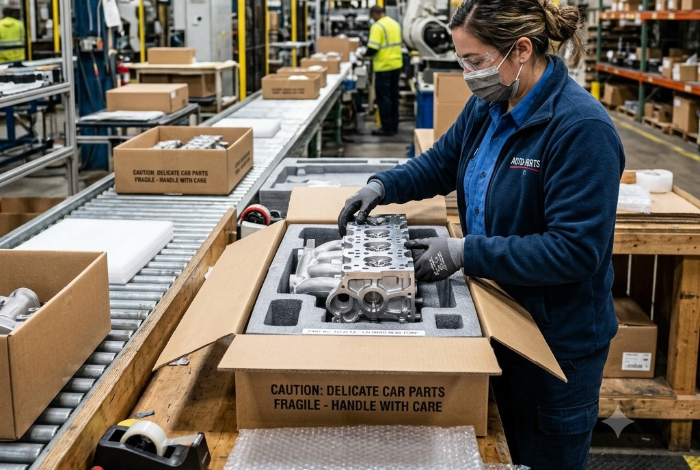
Custom packaging helps you address these issues at the design stage. The dimensions, material, internal fittings and closure can all be selected according to the product’s requirements. For example, a bespoke corrugated box with a fitted insert may provide a more secure and consistent solution than a standard box filled with loose cushioning.
Before you invest in a new packaging design, identify what isn’t working with your current packaging.
- Is it difficult to assemble?
- Does it use excessive material?
- Do products arrive damaged?
- Do employees spend too long preparing each shipment?
Understanding the problem helps you decide whether custom packaging is the right solution.
Your products need better protection
Product protection is one of the biggest reasons to consider custom packaging. If you manufacture fragile, high-value or precision-engineered products, damage can have consequences beyond the cost of replacing an item. It can also cause production delays, extra transport costs, customer complaints, and time spent investigating what went wrong.
Custom packaging design can improve consistency by holding a component in a defined position, so employees can pack it the same way each time. This reduces any reliance on improvised protection and makes it easier to follow a standard packing process.
For businesses that ship the same product regularly, this consistency can be especially valuable.
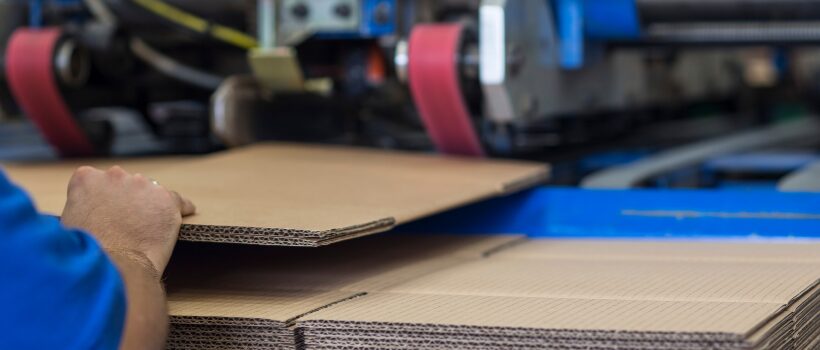
However, a bespoke design shouldn’t simply be assumed to provide better protection because it fits the product. You need to assess and test it against the risks involved, consider where damage has occurred in the past, how goods are handled and what conditions they may experience during transit.
Suttons can develop prototypes and manage ISTA testing where required, helping you assess whether a proposed solution is suitable before moving into production.
Your packaging costs are adding up
The purchase price of packaging is only one part of the overall cost.
If your existing solution requires several protective materials, takes a long time to assemble or regularly leads to damaged products, the wider costs might be higher than they first appear. Reviewing these expenses can help you to establish whether a custom design could offer better value.
Using standard packaging that is significantly bigger than your product means buying extra void fill to fill empty space and prevent movement in transit. Whereas custom packaging and inserts reduce the need for extra materials while providing more consistent protection, whilst also being easier to store and handle, depending on their design and how your business manages stock and shipments.
The same principle applies when your products repeatedly arrive in poor condition; you need to consider the cost of replacements, returns, repeat deliveries, and the time spent resolving customer issues. Depending on how well a packaging design addresses these issues, it can reduce these costs, but results depend on the cause of the damage and how well the new design addresses it.
To assess the potential return on investment (ROI), compare your current packaging costs with the expected costs of the proposed solution. Include any material purchases, packing labour, storage, waste and any damage-related expenses. You should also take into account any design and tooling costs, order quantities and any minimum production requirements; this gives you a more realistic comparison than looking at the price per box alone.
You want to improve packing efficiency
Your packaging set-up can affect the overall speed and consistency of your production and dispatch operations.
If employees need to cut down boxes, add several layers of protection or work out how to position each product, packing can become unnecessarily complicated. These small tasks add up when you package the same products repeatedly.
A custom solution can simplify your process by providing the right dimensions, internal support and closure from the outset. For example, a foam insert designed for a specific piece of equipment can clearly show where each component belongs.
If your products move regularly between manufacturing sites, suppliers, or customers, a consistent packaging design can also create a more repeatable process across the supply chain, making it easier to train employees, standardise working methods, and maintain quality across shifts or production areas.
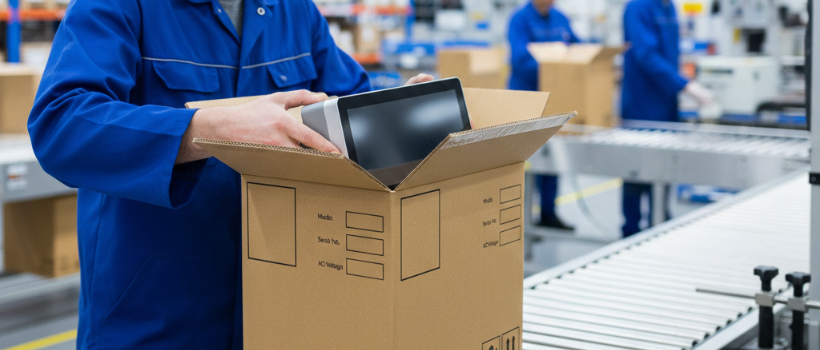
Before you invest, assess the existing process and establish where the time is being spent. Record how long it takes to prepare and pack a product, which materials are used and where errors or delays occur. You can then compare the current method with a prototype to see whether the proposed design offers a measurable improvement.
Custom packaging is most valuable when it solves a real operational problem rather than simply changing the package’s appearance.
You need to reduce material use and waste
More packaging doesn’t automatically mean better product protection. If a standard box is too big or the internal cushioning isn’t suited to the product, you’re probably using unnecessary materials without achieving the required performance.
Custom packaging lets you consider the structure, dimensions, and protective elements together, rather than relying on extra materials to compensate for a poor fit.
For instance, a bespoke corrugated design can reduce empty space around a product, while a fitted foam insert can provide support in specific areas. Depending on the application, this could reduce loose void fill or the number of separate components required; the goal is to use the right amount of material to meet your packaging requirements.
Sustainability should also be part of the design process, and where suitable, you should select recyclable materials, simplify the packaging structure, or develop a reusable solution for products that move repeatedly along the same supply routes.
The best option depends on your product, how the packaging is used, and what happens to it after use. A packaging review can help identify opportunities to reduce waste while maintaining the protection your products need.
Your packaging needs to support higher production volumes
As your operation grows, your packaging requirements will change. A solution that works for occasional shipments can become less efficient when you produce and dispatch the same products in larger quantities.
More orders mean greater demand for packaging stock, more time spent packing and a stronger need for consistent quality.
Custom packaging helps you standardise how you prepare your products for shipment. Once the design is developed and approved, it provides a repeatable solution for regular production runs. This may make it easier to plan material requirements, train your employees and maintain consistent packaging performance.
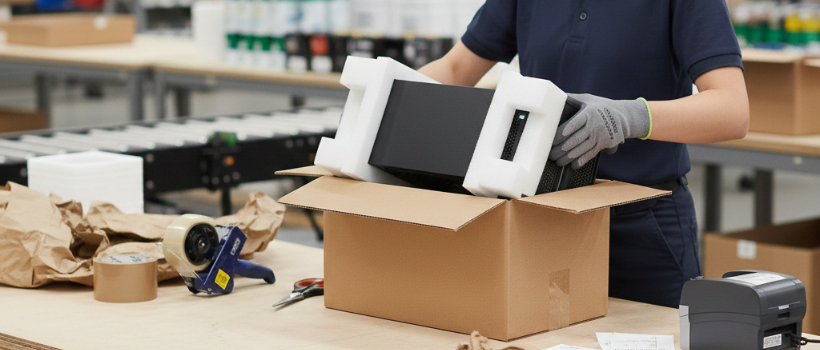
The extent of these benefits will entirely depend on how frequently the packaging is being used and how stable your product specifications remain.
This is where order volumes become an important part of the investment decision. Design work and any setup costs need to be considered alongside the number of packages you expect to use. For a product with predictable and ongoing demand, these initial costs can be easier to justify across repeated orders.
If demand is irregular or the product is likely to change significantly, a standard solution may be more appropriate until the requirements are clear.
When should you stick to standard packaging?
Custom packaging isn’t the best investment for everyone. If your product fits in a standard box, needs straightforward protection, and can be packed efficiently with readily available materials, a bespoke design offers little benefit.
In these circumstances, standard packaging can provide a practical, cost-effective solution without the added design and development process.
It may also make sense to use standard packaging when you are testing a new product or demand is uncertain. If the product specifications are likely to change, then investing in a final bespoke design too early could lead to packaging that quickly becomes unsuitable. A standard option can give you the flexibility you need while you establish the product’s requirements and expected volumes.
The key here is to compare all of your options objectively and identify what your packaging needs to achieve. Assess how well standard formats meet those requirements, and calculate the total cost of each approach.
If a stock solution performs well and does not create unnecessary work or expense, there may be no reason to change it. If it creates recurring problems, it may be worth investigating custom packaging.
Is custom packaging worth the investment?
Before commissioning a bespoke design, establish your goals and how you will measure success. This could be reducing product damage, cutting packing time, reducing material use or making packaging easier to store and handle.
Having a clear objective helps you assess the design against your business requirements instead of relying on general claims about the benefits of custom packaging.

Next, calculate your current packaging costs. Make sure to include the purchase price of packaging materials, additional protective materials, labour required for packing, storage and waste. Where relevant, consider the cost of damaged products, returns, replacements and repeat deliveries.
Use your own operational data wherever possible, as the impact of these costs will vary between businesses and applications.
You can then compare those figures with the proposed custom solution. Make sure to include design and development costs, any setup charges, the expected unit price, order quantities and storage or delivery arrangements.
Estimate the potential savings based on realistic assumptions; for example, if the new design is expected to reduce packing time, calculate the difference using the number of packages you handle and the time saved per package.
Finally, it is essential that you test the packaging before rolling it out across your operation. Check that it protects the product, works for employees and can be supplied in the quantities you need. Measure the results against your original objectives and review them after implementation.
This gives you a more reliable basis for deciding whether the investment is worthwhile and whether you need further design improvements.
Summary
Custom packaging is worth considering when your current solution doesn’t meet the needs of your products or operation. It can help improve product protection, reduce unnecessary materials, simplify packing processes and create a more consistent approach to handling and dispatch.
However, in some cases, standard packaging can remain the most practical option if it provides the required protection and works efficiently.
Start by identifying the problem you want to solve, then compare the current approach with a suitable custom design. Consider costs beyond the packaging itself, test prototypes with your actual products, and measure results before making a wider change. This will help you to understand whether a bespoke solution offers genuine value for your business.
At Suttons, we work with manufacturers to develop packaging around their products, processes and supply chain requirements.
With in-house design and prototyping, flexible production volumes and support with testing and inventory management, we can help you assess the options and identify a solution suited to your application.
If you’re considering custom packaging for your business, get in touch with our team of packaging experts and discuss your requirements today.

