
Minimise space and control your costs
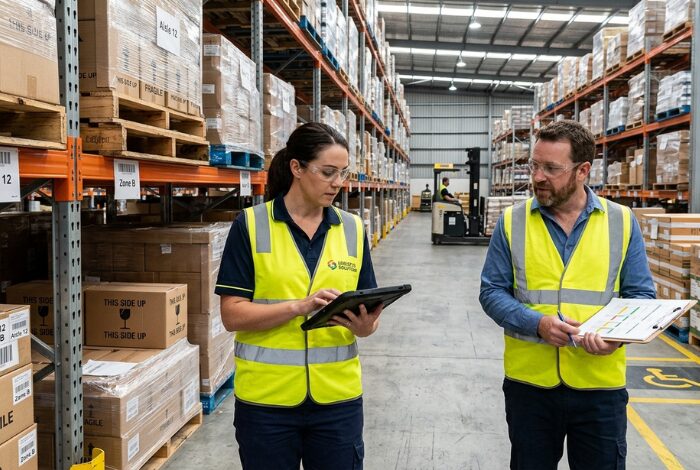
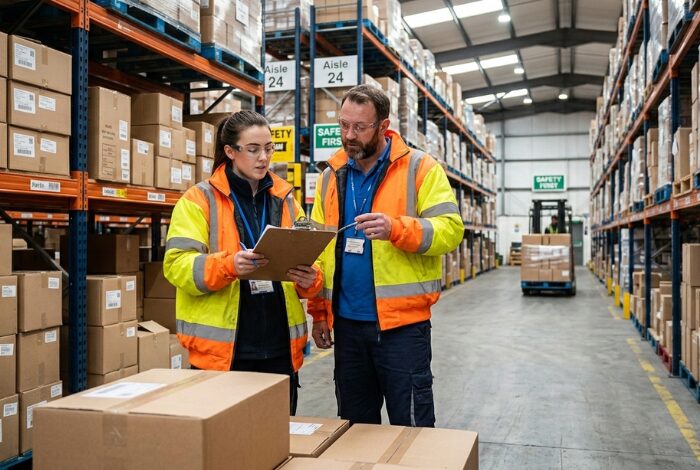
Space within your warehouse is valuable, and rarely cheap. Beyond the floor area itself, there are additional costs: staffing, lighting, heating, ongoing maintenance, insurance, and, of course, the opportunity cost of not using that space for something more productive within your business.
For many companies, packaging is one of the largest and most persistent demands on warehouse space. Multiple box sizes, void-fill materials, and specialist packaging lines all contribute to a bulky, often unoptimised packaging inventory.
Fortunately, there are several highly effective ways to reduce how much space your packaging requires, while also improving efficiency and lowering your operating costs.
In this guide, we’ll outline five practical strategies that are commonly overlooked and can help you significantly cut your packaging storage footprint.
Contents
The problems caused by excessive packaging storage
For many businesses, the hidden cost of storage is substantial. Rent or lease costs, utilities, maintenance, and labour all accumulate quickly, especially when large quantities of slow-moving packaging sit on shelves for months.
However, the impact goes beyond just cost:
- Reduced efficiency: A large, complex inventory slows down picking, increases errors, and can result in the wrong packaging being used.
- Higher risk of damage: Packaging stored for long periods can become dusty, damp, crushed, or otherwise compromised.
- Challenging stock management: More lines mean more stock checks, more admin, and more potential for unexpected shortages.
- Lost opportunity: Valuable space is locked up by packaging that isn’t actively helping your business grow. This space could otherwise support extra production capacity, more finished goods storage, or improved operational flow.
When these issues begin to hinder performance, it’s time to rethink how your packaging is specified, purchased and stored.
Five ways to reduce packaging storage requirements
The following strategies are specifically relevant to packaging, but many can also improve broader stock management.
The five key tactics are:
- Rationalise your packaging range.
- Reduce the amount of void fill that you use.
- Explore material changes.
- Improve your forecasting.
- Use a Just-in-Time supply model.
Rationalise your packaging inventory
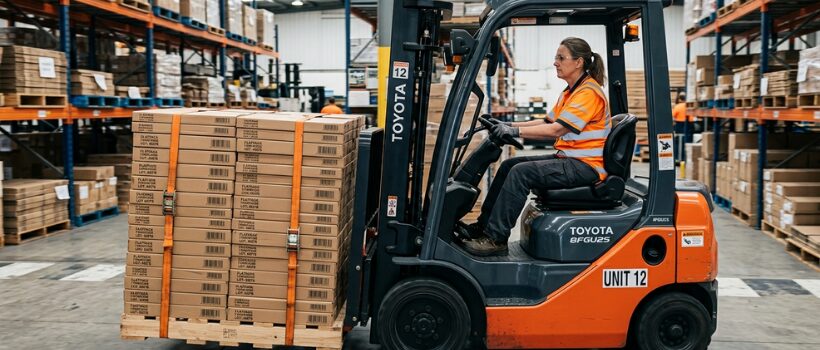
One of the simplest ways to reduce storage is to rationalise your packaging range.
A specialist packaging designer can review all of your current packaging lines and identify opportunities to consolidate them. For many businesses, a surprisingly large number of box sizes are used only occasionally.
By redesigning your packaging, you can often replace several low-volume items with a single, well-designed solution. Inserts, fittings, or adjustable designs can ensure products still receive the same level of protection.
Not only does this free up warehouse space, but it also leads to:
- More efficient stock management.
- Reduced purchasing complexity.
- Lower inventory holding costs.
- Economies of scale when ordering.
- Shorter picking times and fewer packing errors.
Although rationalisation doesn’t physically shrink the packaging, it dramatically improves the efficiency of your storage space.
Reduce the amount of void fill you use
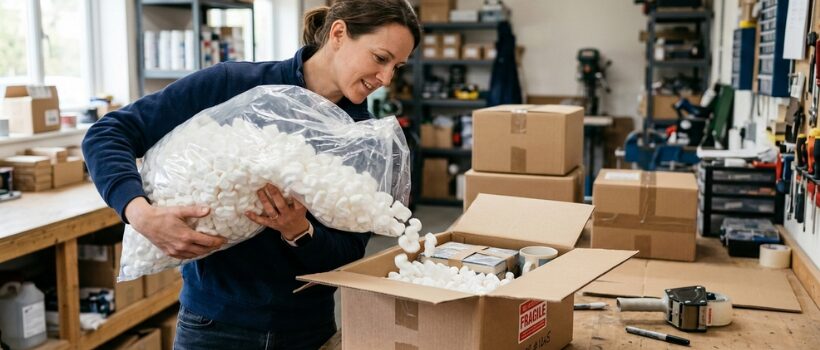
Void fill – whether foam, bubble wrap, air pillows, or loose fill – can take up far more space than you realise.
While these materials play an essential role, they are often used to compensate for outer packaging that isn’t ideally sized.
Switching to custom-designed packaging for your products reduces or even eliminates the need for bulky void fill. Options such as engineered foam inserts or flat-packed corrugated fittings offer excellent protection while saving significant storage space.
Additional benefits include:
- Lower packing material costs.
- A neater, more sustainable unboxing experience for customers.
- Better optimisation of pallet and transport space.
Right-sizing your packaging allows you to protect your products effectively while storing and shipping more efficiently.
Investigate potential material changes
The board grade, thickness, and material specification of your packaging all influence how much space it occupies when stored.
It’s common, for example, for businesses to use double-wall cardboard when a lighter single-wall specification (tested and validated) would perform just as well. Even small reductions in material thickness can result in significantly smaller pallet loads and reduced storage requirements.
Material optimisation brings other benefits too:
- Lower purchasing costs.
- More efficient deliveries (more boxes per pallet).
- Reduced environmental impact.
It’s essential, however, that many material change is tested. Our packaging specialist can run performance assessments to ensure protection isn’t compromised.
Use improved forecasting
Accurate forecasting plays a key role in determining how much packaging to keep in stock.
By analysing historical usage patterns, seasonal peaks, and promotional cycles, you can maintain smaller inventories during quieter periods while ensuring you have enough for busy ones, such as Black Friday or Christmas.
For some businesses, forecasting difficulties are a sign that a vendor-managed inventory or JIT service may be beneficial. Still, even minor improvements to your planning can reduce the amount of packaging sitting idle.
Take advantage of Just-in-Time packaging supply
The most impactful way to reduce packaging storage is to utilise Just-in-Time (JIT) supply or a fully-managed inventory service.
At Suttons, we can hold an agreed stock level for you at our facility. You then call off smaller quantities only when needed. This dramatically reduces the amount of packaging occupying your warehouse.
The benefits of a Just-in-Time supply service include:
- Huge storage space savings.
- Rapid turnaround and shorter lead times.
- More flexible manufacturing schedules.
- Smaller and more frequent deliveries.
- Improved cash flow and reduced stock obsolescence.
- Data-driven forecasting from your packaging partner.
Many businesses have reclaimed large areas of warehouse space this way, freeing them to increase production, improve workflows, or store more finished goods.
Summary
Reducing the storage required for your packaging can lead to substantial cost savings, greater efficiency, and improved operational flexibility.
Not every approach will suit every business, but adopting even one of two of these strategies can have a measurable impact.
If you would like tailored advice, or want to explore how the team at Suttons can help reduce your packaging storage needs, our team would be happy to help.