
Introduction
If you’re responsible for packing automotive parts, you’ll already know how much it relies on getting it right. From preventing expensive transit damage to keeping production lines moving efficiently, your packaging decisions directly impact your bottom line and customer satisfaction.
Whether you’re an OEM, tier 1, or tier 2 supplier, the challenge is the same: how do you protect a wide range of components, from heavy metal parts to delicate electronics, while keeping costs, sustainability, and efficiency under control?
In this guide, we’ll walk you through key considerations for packing automotive parts to help you make informed decisions that benefit your entire operation.
Contents
- Understanding the scale of automotive packaging
- Matching packaging to product weight
- Protecting against damage and fragility
- Considering the value of your components
- Streamlining your packing process
- Preparing for supply chain conditions
- Protecting automotive electronics from static
- Preventing corrosion with VCI protection
- Avoid surface damage and scuffing
- Meeting regulations for lithium batteries
- Reducing environmental impact
- Summary
Understanding the scale of automotive packaging
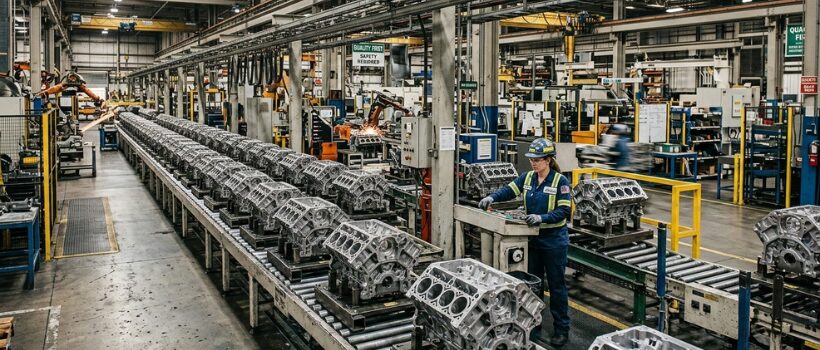
It’s easy to underestimate the sheer scale of the automotive sector. In the UK alone, automotive manufacturing generates £92 billion in annual turnover, with hundreds of thousands of vehicles and millions of components produced each year.
With a single vehicle made up of as many as 30,000 individual parts, the complexity of packaging quickly becomes clear. Every component has different requirements, and using a one-size-fits-all approach simply won’t deliver the protection or efficiency you need.
That’s why many businesses turn to tailored packaging solutions, combining materials such as corrugated cardboard, protective foams, and specialist cases to create systems that work seamlessly within their supply chain.
Matching packaging to product weight
One of the first things you should consider is the weight of the parts you’re packing.
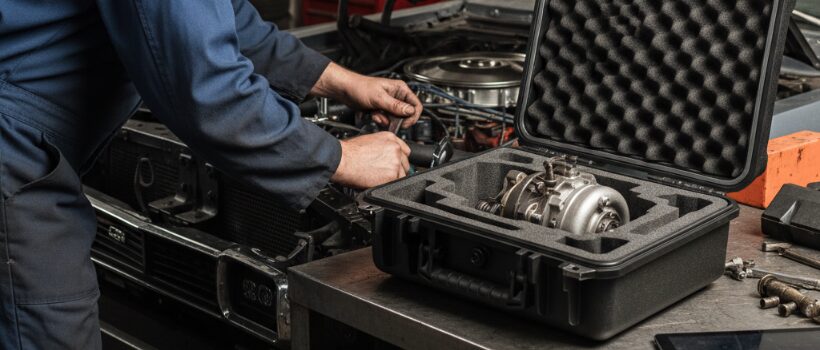
Heavier components, such as engines or gearboxes, require robust packaging that withstands the stresses of handling and transport. This might include heavy-duty corrugated boxes, pallet boxes, or even rigid cases with custom inserts to keep items secure.
On the other hand, lighter parts should be packed with efficiency in mind. Over-engineering packaging for lightweight items adds unnecessary cost and increases shipping weight, which can also impact your carbon footprint.
The goal is to get the right balance between protection and efficiency.
Cost savingsProtecting against damage and fragility
Not all automotive parts are as tough as they might seem. Even durable components can suffer damage if they collide during transit or are exposed to repeated handling.
This is where internal packaging plays a crucial role. Foam inserts, dividers, and dunnage solutions help immobilise parts, preventing movement and absorbing shocks along the way.
For more delicate items, such as sensors, trims, or precision-engineered components, higher levels of cushioning may be required. Custom-designed inserts ensure each part has its own dedicated space, reducing the risk of damage and improving consistency during packing.
Considering the value of your components
The value of the items you’re shipping should also influence your packaging strategy.
High-value components, such as infotainment systems or specialist assemblies, justify a greater investment in protective packaging. A more robust solution significantly reduces the risk of damage, returns, and associated costs.
For lower-value items, however, it’s important to avoid over-packing. Using cost-effective materials and simpler designs can help maintain profitability without compromising essential protection.

Streamlining your packing process
Take a step back and look at your packing operation.
Are your teams using multiple materials, such as bags, films, and inserts, that slow things down? Are there unnecessary steps that could be eliminated?
Well-designed packaging can simplify the entire process for your staff. For example, integrated inserts or pre-assembled solutions can reduce packing times, while compartmentalised designs make it easier to organise and access components.
Improving packing efficiency can also reduce labour costs and minimise the risk of errors.
Preparing for supply chain conditions
It’s essential that your packaging is designed for the real world. Think about how your products move through the supply chain.
How many times are they handled? Are they transported by road, sea, or air? Will they be exposed to moisture, temperature changes, or outdoor environments?
If your packaging is likely to encounter harsh conditions, additional protection may be required. Waterproof cases, coated corrugated materials, or sealed designs can help protect your products against environmental risks.
You should also consider presentation. For aftermarket or retail parts, packaging may need to arrive in pristine condition, making durability and appearance equally important.
Protecting automotive electronics from static
Modern vehicles rely heavily on electronics, from driver assistance systems to infotainment units. These components are particularly vulnerable to electrostatic discharge (ESD), which can cause irreversible damage.
To prevent this, you should use anti-static or conductive packaging materials. These solutions are designed to safely dissipate electrical charges, often creating a “faraday cage” effect that protects sensitive components.
Ignoring ESD risks can lead to hidden damage that only becomes apparent later, resulting in failures, returns, and reputational damage.
Preventing corrosion with VCI protection
Corrosion is another risk that metal components face.
When parts are shipped over long distances or stored for extended periods, exposure to moisture and air can cause rust. Volatile Corrosion Inhibitor (VCI) materials help prevent this by releasing protective compounds that form a barrier on metal surfaces.
VCI can be introduced through papers, bags, or coatings. While traditional methods may add steps to your packing process, integrating VCI into your packaging materials can streamline operations while maintaining protection.
Avoid surface damage and scuffing
For components with visible or decorative finishes, even minor scuffs can render parts unusable.
Painted trims, polished surfaces, and interior elements require special attention. Soft-touch materials or specialist coatings can be used for inserts and dividers to prevent abrasion.
It’s also worth noting that standard corrugated cardboard can sometimes be more abrasive than expected. Using coated or treated materials can help to minimise this risk and ensure your products arrive in perfect condition.
Meeting regulations for lithium batteries
With the rise of electric vehicles, lithium-ion batteries are becoming increasingly common and introducing a new level of complexity.
These batteries are classified as hazardous goods and must be packed in compliance with strict regulations, such as UN3480. This often requires specialised packaging designed to contain potential hazards, including thermal events.
Solutions can include robust cases with engineered inserts that provide both protection and containment. Ensuring compliance is essential for safety and avoiding delays and penalties during transport.
Reducing environmental impact
Sustainability is now a key consideration for most businesses, and packaging plays a significant role.
You should assess whether your packaging:
- Minimises empty space during transit.
- Uses recyclable or recycled materials.
- Can be reused within a returnable system.
Returnable packaging, such as reusable containers or durable cases, can significantly reduce waste over time. Meanwhile, optimised designs that reduce material usage and improve pallet efficiency can lower both costs and emissions.
Balancing sustainability with performance is essential here, but with the right design, you can achieve both.
Summary
Successfully packing automotive parts is about understanding your products, your processes, and your supply chain.
From weight and fragility to electronics protection and environmental impact, every decision you make influences how well your packaging performs. Getting it right can reduce damage, improve efficiency, and strengthen your relationships with customers.
At Suttons Performance Packaging, we work with businesses across the automotive sector to develop tailored solutions, from corrugated packaging and foam inserts to specialist cases and anti-static materials.
If you’re looking to improve how you pack and protect your automotive parts, our team is here to help you find the right solution for your operation, get in touch today.

