


Foam conversion for protective packaging and engineered products
If you rely on foam-based protective packaging, there’s a strong chance foam conversion already plays a role in your supply chain.
Foam conversion refers to the specialised manufacturing processes used to transform raw foam blocks or sheets into finished components. These components can range from precision-engineered case inserts and transit packaging to consumer and industrial products such as acoustic panels, protective pads, and footwear components.
Common conversion techniques include CNC machining, die cutting, waterjet cutting, sawing, bonding, and surface marking. A wide variety of foams can be used, including Plastazote®, Stratocell®, Ethafoam®, and emerging sustainable alternatives.
But how does foam conversion actually work? Which processes are best suited to different applications? And how do you choose the right foam converter for your specific project?
In this guide, we’ll cover the common foam materials used in conversion, the main foam fabrication techniques, and the typical products manufactured using converted foam.
Contents
What is foam conversion?
At its simplest, foam conversion is the process of shaping foam materials into usable products.
This includes a wide range of manufacturing techniques such as cutting, routing, laminating, and surface marking. Through conversion, flat foam sheets or blocks become finished components such as case inserts, end caps, internal packaging supports, and tool control systems.
Foam conversion is widely used not only for packaging, but also for industrial, acoustic, automotive, and consumer applications. However, its most visible and valuable use is in transit and protective packaging, where precision and performance are essential.
Common uses of engineered foams
Foams are used in far more applications than many people realise. Their ability to absorb shock, reduce vibration and insulate against noise and temperature makes them highly versatile.
Typical uses include:
- Vibration and noise reduction in vehicles.
- Acoustic treatment for audio and industrial environments.
- Insulation within construction and infrastructure.
- Sports and leisure products such as mats and insoles.
- Protective packaging for transport and storage.
In packaging, converted foams are designed to immobilise products, protect vulnerable areas and maintain performance throughout the distribution cycle.
From raw foam to finished packaging
Before looking at conversion methods, it’s important to understand the distinction between foam manufacturers and foam converters.
Foam manufacturers
Foam manufacturers produce the base materials. Using polymer-based processes (and increasingly fibre- or plant-based alternatives), they create foam sheets and blocks with specific densities, thicknesses, and performance characteristics.
Foam converters
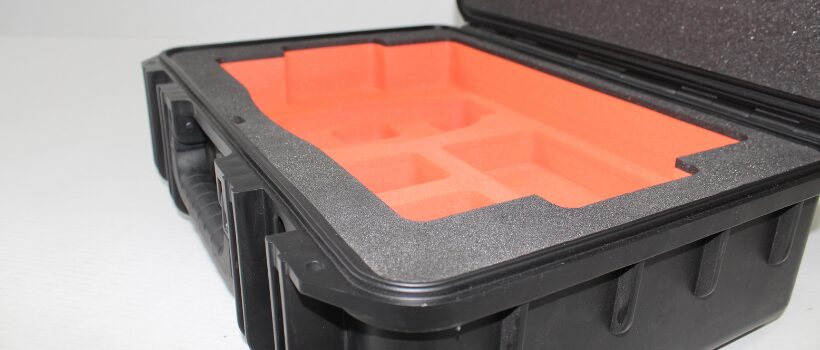
Foam converters then take these raw materials and fabricate them into finished components. This stage involves design, material selection, and manufacturing, often using CAD software linked directly to cutting and machining equipment.
For protective packaging, the conversion process usually begins with analysing the product being packed. Size, weight, fragility, handling conditions, and outer packaging are all assessed before a bespoke foam design is created.
Foam materials used in conversion
Different foam materials offer different levels of protection, durability, and cost efficiency. Choosing the correct foam is critical to achieving the right balance between performance and budget.
Commonly converted foams include:
- Plastazote® – A high-quality, closed-cell polyethylene foam offering excellent consistency and long-term durability.
- Stratocell® – A lightweight foam often used for economical transit protection.
- Ethafoam® – A robust material suited to industrial and single-use packaging.
- Chemical block foams – Available in a range of densities for varied applications.
- Wood foam – A newer, fibre-based option with improved sustainability credentials.
Experienced foam converters match material properties to the specific packaging requirements and manufacturing method.
How foam is shaped and fabricated
There are several different techniques used to convert foam into finished packaging products. Each has its own strengths and is suited to particular materials, designs, and production volumes.
The most common foam conversion methods are outlined below.
Die-cut foam components
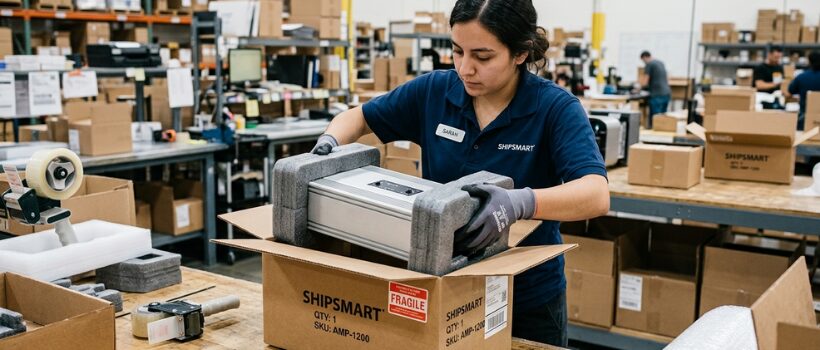
Die-cutting uses a shaped cutting tool to stamp foam into consistent forms. It is typically carried out on flatbed presses and is well-suited to producing large quantities of identical parts.
This method is fast, repeatable, and cost-effective for higher volumes. It is particularly effective with lower-density foams such as Stratocell® and Ethafoam®.
As pressure is applied during cutting, edges may show slight compression, but this has no impact on protective performance.
Die-cut foam is commonly used for:
- End caps and corner protection.
- Foam-lined cartons.
- High-volume transit packaging.
CNC-machined foam inserts
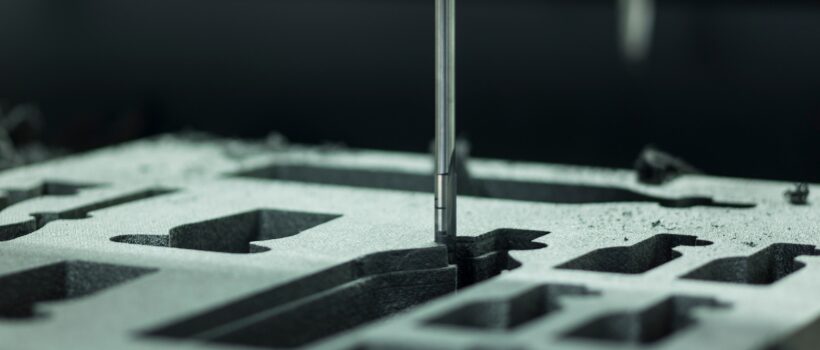
CNC machining is used to produce detailed, three-dimensional foam components, most often from higher-density materials like Plastazote®.
Using CAD data, CNC machines precisely remove foam to create cavities that match the product profile. This ensures a close fit and prevents movement during transit.
This method is extremely accurate and consistent, ideal for complex shapes and delicate items, and suitable for lower-volume production, as no tooling is required.
CNC-machined foam inserts are commonly used for:
- Protective cases
- Tool control and shadow boards.
- Presentation and demonstration cases.
Waterjet-cut foam solutions
Waterjet cutting uses a high-pressure stream of water, controlled by CNC software, to cut through foam materials.
This process produces clean edges, sharp internal corners, and very fine detail, without generating heat or dust. It is also highly repeatable and environmentally efficient, operating in closed-loop systems.
Waterjet-cutting is commonly used for:
- Multi-layer case inserts.
- Reusable foam dunnage for tote boxes.
- Automotive and aerospace component packaging.
Foam sawing and sizing
Sawing is used to cut foam sheets and blocks down to size, either as a preparation step or as part of the final manufacturing process.
Converters use band saws, hot wire cutters, or automated cutting systems, depending on the material and finish required.
This process supports nearly all other foam conversion techniques and is essential for:
- Preparing raw foam stock.
- Trimming laminated foam blocks.
- Achieving clean and uniform edges.
Building thickness through lamination
Foams are supplied in standard thicknesses, which means layers often need to be bonded together to achieve the required depth.
Lamination is carried out using industrial adhesives or heat welding, creating a strong and permanent bond between layers.
Laminating foam allows converters to:
- Achieve precise material thickness.
- Combines different foam colours.
- Create visual contrast for tool control systems.
This makes laminated foam ideal for shadow boards, sample cases, and premium presentation packaging, where both function and appearance matter.
Marking and branding foam inserts
Rather than cutting through foam, lasers are most commonly used to mark the surface.
Laser engraving creates permanent text, outlines, or logos by darkening or removing the foam’s surface layer.
Laser-marked foam can display:
- Company branding and logos.
- Part numbers and layouts.
- Handling or safety instructions.
This improves organisation, efficiency, and professionalism, particularly for service engineers and technical teams using portable cases.
Summary
With multiple foam materials and conversion methods available, selecting the most appropriate solution requires experience and technical understanding.
At Suttons, foam conversion is approached as an engineered process rather than a one-size-fits-all solution. By combining material knowledge, CAD-led design, and specialist manufacturing techniques, bespoke foam packaging can be created to meet performance, cost, and sustainability requirements.
If you’re exploring foam conversion for protective packaging, case inserts or engineered transit solutions, working with an experienced converter ensures the finished product performs exactly as intended.
